Crypto moves fast. Markets, trends, and tech change quickly. If you’re building Web3 products, it can be tough to keep up.
Instead of grinding 24/7, there are smart ways to stay on top of things. To keep up, you need clear goals, sharp prioritization, and fast execution.
Have a North Star – Goals
If you don’t know where you want to go, your speed doesn’t matter. When you have a clear goal, you can make better choices. When your team knows the goal, you can delegate for efficiency and scale. Having a goal lets you block out the noise of the volatile crypto market and BUIDL.
How to do it:
Objectives and Key Results (OKRs) is a popular method way to set goals.
Objective. This is your goal or what you hope to accomplish.
Key Results. This is how you will measure progress and know that you are moving in the right direction.
e.g. Objective: 100,000 JACE tokens staked
Key Results:
- Increase total number of unique stakers to 10,000
- Have people stake for 6 weeks on average
- Share 3 posts about staking each week
Place Your Bets Accordingly – Prioritization
Nothing is guaranteed and most times you have to go with your best guess. You might have a lot of ideas and hopefully you’ve heard from your users. Pick the ideas that will help you reach your goals and key results.
How to do it:
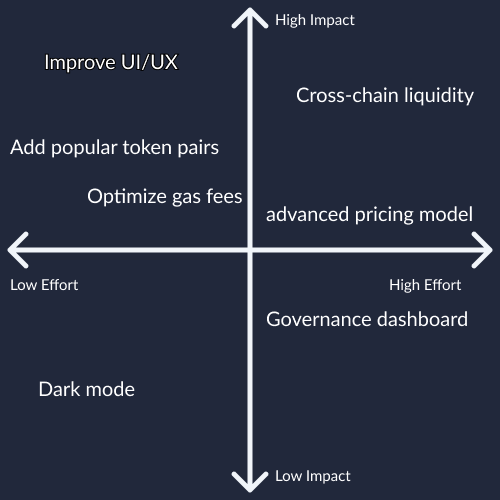
Use the Impact-Effort matrix. It helps you choose what to do first.
Prioritize the high impact-low effort and high impact-high effort items accordingly. If time and resources allow, you can tackle the low impact-low effort items. Avoid the low impact-high effort items.
e.g.
Do the Work, Trust the Process – Ship Fast
Execution and delivery is the key to business, especially in the fast paced Web3 world. It’s too easy to jump from one idea to another. It’s also a guarantee that fires and shiny objects will pull you and your engineering team away from the work you know you need to do. Trust in your goals, prioritization and stick to the plan. There will be time to reassess and pivot but you need to ship and make progress before you can make that decision.
How to do it:
Use 2-week sprints. Plan what your team can do in 2 weeks. Don’t change the plan during those 2 weeks. Let your team focus on finishing their work.
Engineers and designers need time for focused and deep work to do their best. Changing priorities every few days causes too many disruptions and unnecessary meetings.
These frameworks and best practices can help you to improve your prioritization and ship faster. If you want to know how to apply these to your unique constraints and situation, please reach out and I’d be happy to give ideas and tips that you can apply.
We’re still early in crypto and success belongs to those who can navigate the chaos with a clear vision and decisive action.
GM and LFG 🚀